Carbon You Can Count On: How FastTrack is Raising the Bar for Credible Restoration
Land Life’s advanced carbon prediction model, FastTrack, is designed to bring credibility, accuracy and transparency to reforestation projects worldwide. Built for local accuracy and global application, it helps ensure every tonne of carbon removed is robustly estimated, measurable, and backed by data.
Nature tech innovation raising the bar in carbon modelling
Why accurate carbon modelling matters
A credibility engine for nature restoration
FastTrack’s credibility is not based on marketing claims.
It has been peer-reviewed and publishedOpens in a new tab. in collaboration with leading research institutions, including Australia’s CSIROOpens in a new tab. (Commonwealth Scientific and Industrial Research Organisation) and the University of MelbourneOpens in a new tab.. The data generated through this collaboration has also been made publicly available via an open source platformOpens in a new tab., reflecting Land Life’s commitment to research transparency and enabling independent scrutiny and reproducibility within the scientific community. The study demonstrates FastTrack’s IPCC Tier 2 approach – a level of modelling that provides far greater local specificity than generic Tier 1 methods. It also showed that FastTrack, when calibrated for mixed-species reforestation using direct seeding, seedling hand planting, or a combination of both methods, produced predictions that closely matched actual field measurements.
So far, it has been used in Land Life’s project areas, including Australia, Spain, Portugal, Iceland and the United States, with consistent success. Its architecture, however, is designed to be global. Technically, FastTrack can be applied anywhere in the world. The only requirement is data.
Because FastTrack is a data-driven model, it depends on high-quality local inputs. When national forest inventory (NFI) data is available (typically collected and published by governments), Land Life's science team can calibrate the model to local conditions. Where NFI data is missing, projections may rely on representative scientific studies or existing national models. With sufficient information, FastTrack can be adapted for new regions, from Indonesia to sub-Saharan Africa.
What makes FastTrack different?
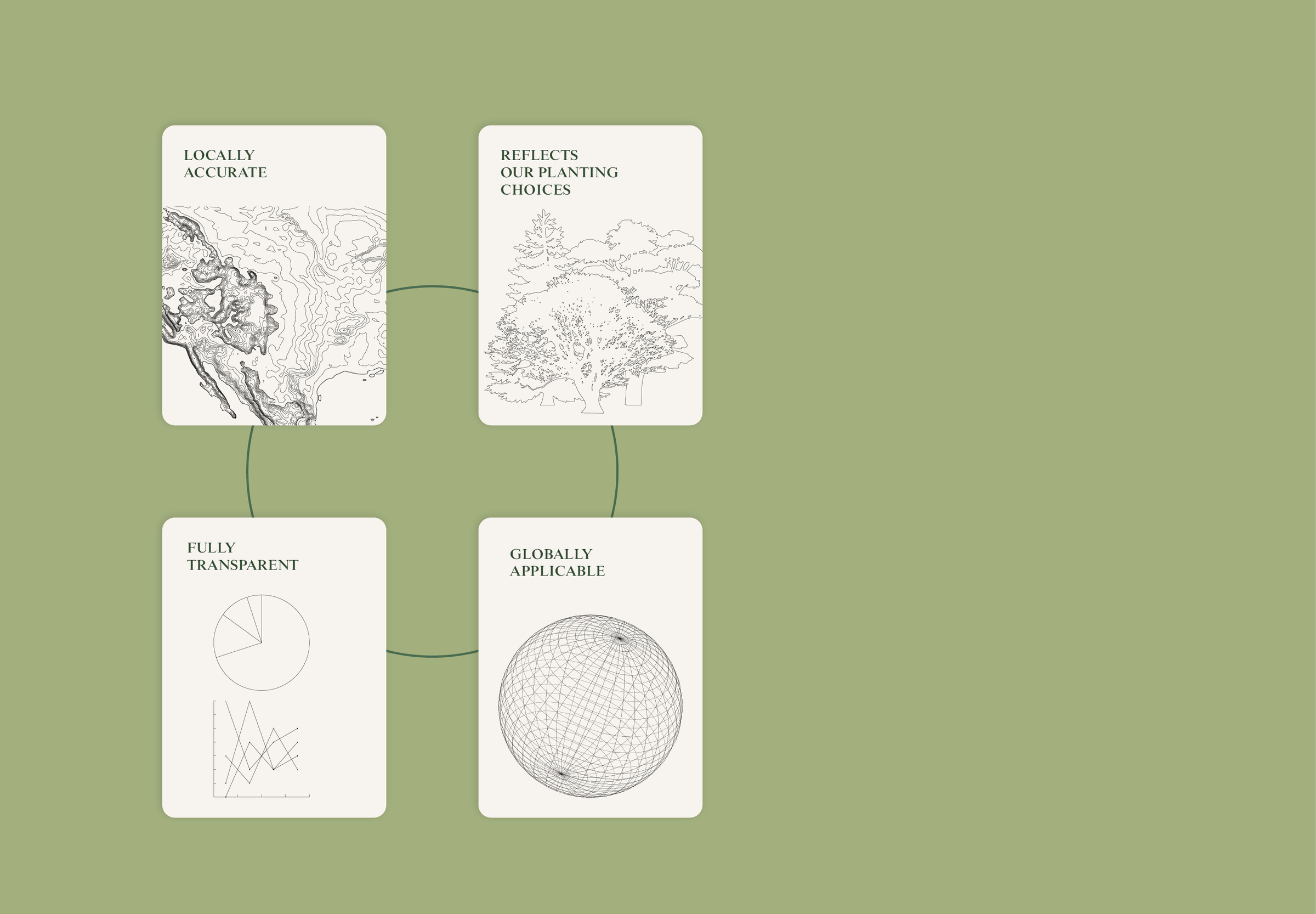
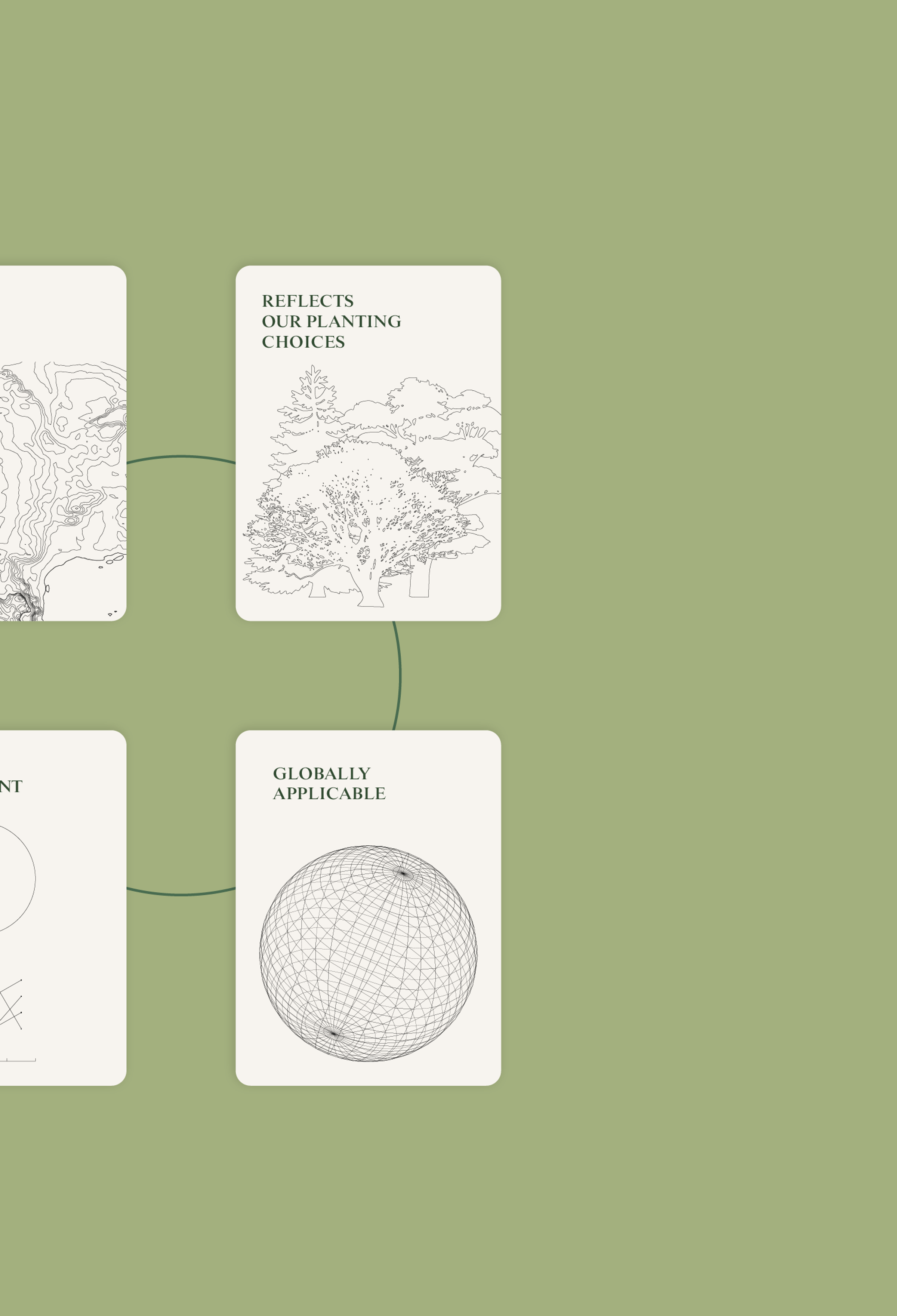
Most carbon models were built for national-scale accounting. They serve national reporting purposes well, but lack the resolution needed for site-specific projects. FastTrack flips that approach. It was designed from the ground up for project-level restoration, and that makes it different in four critical ways:
For clients and partners, this means confidence. FastTrack is more than a model; it is the scientific foundation behind Land Life’s promises.


Proven accuracy
FastTrack has been rigorously tested against real-world measurements across multiple continents, consistently aligning with observed field data and delivering reliable project-level precision. This matters because field validation is the benchmark: it demonstrates that projections reflect reality, not just theoretical assumptions.
Validation wasn’t a one-off exercise. It included comprehensive Site Productivity Assessments across Australia and Spain covering a range of planting conditions and restoration techniques. These assessments allowed FastTrack to be stress-tested against diverse climates, species mixes and site characteristics, ensuring its predictions hold up under real-world complexity.
Why does this matter? Because when nature restoration projects promise carbon outcomes decades into the future, trust hinges on robust science. FastTrack’s validation gives businesses, landowners and stakeholders confidence that the projections they rely on are backed by scientific data and not rough estimations. It shows that integrity in carbon modelling is achievable and that the outcomes we commit to are grounded in reality.
Faster insights, smarter planning
Accuracy is vital – but so is speed. FastTrack delivers both. Once a site is assessed, Land Life’s science team can produce a tailored carbon projection typically in just a few days. For project developers and carbon buyers, this speed matters. It means planning decisions can be made faster, with confidence that the numbers behind them are sound.
Reporting with rigour
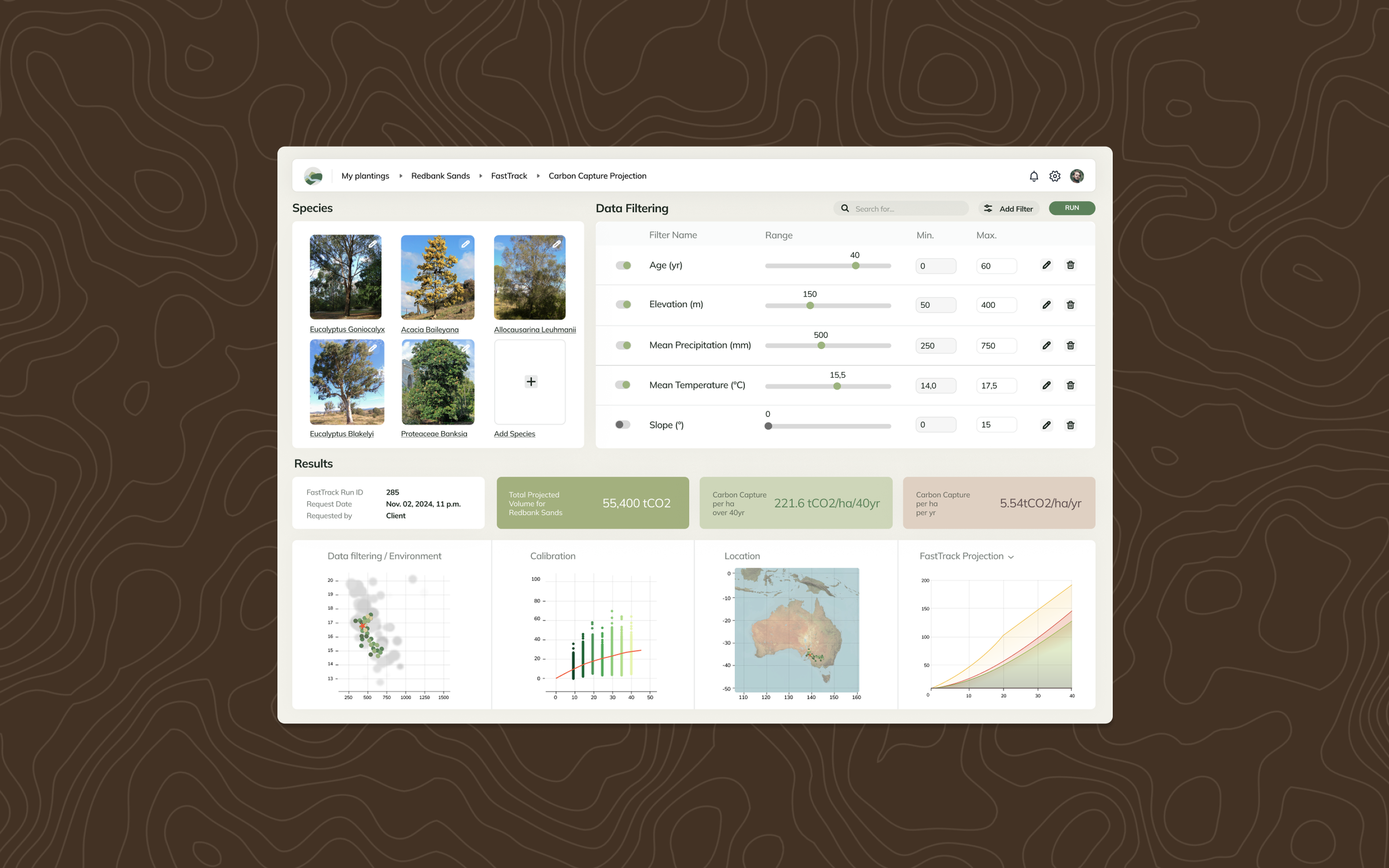
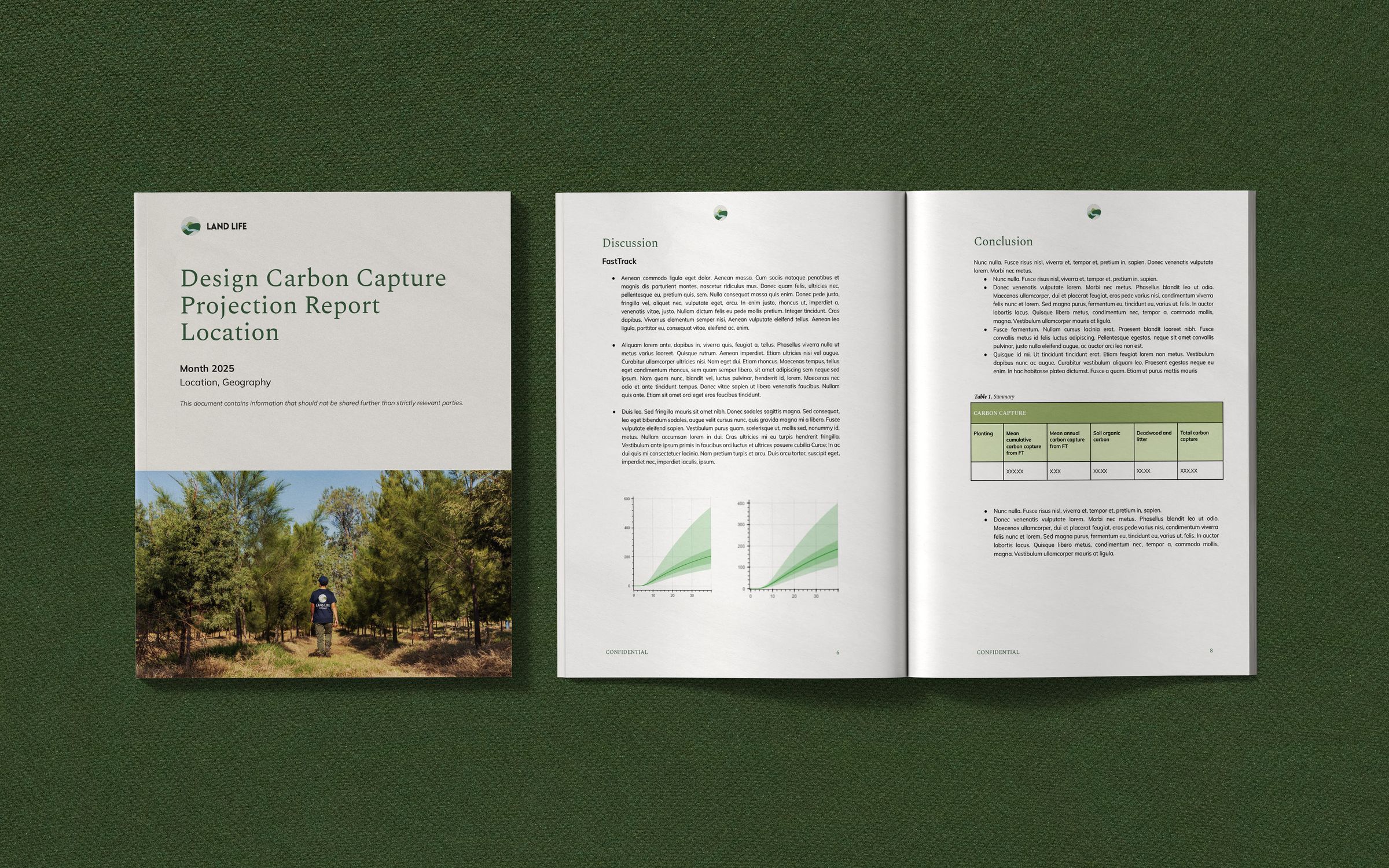
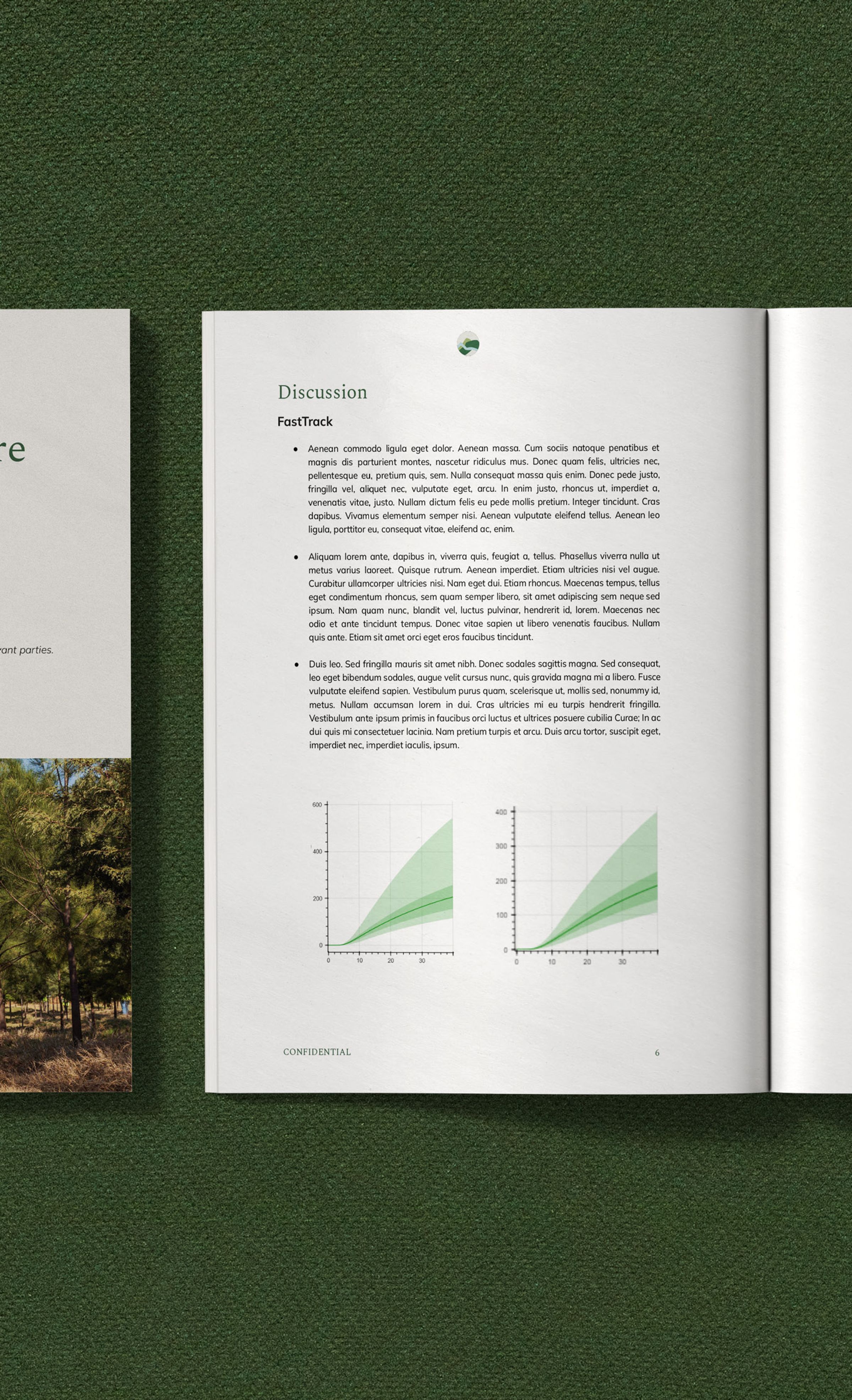
Every FastTrack projection comes with a detailed report that goes far beyond a simple spreadsheet. Structured like a scientific paper, it includes an abstract, methodology, results and key assumptions, data filters, and site-specific parameters.
The report summarises results in clear tables and visuals, and provides appendices with maps and supporting data. This level of robustness and transparency is unique in reforestation projects, giving clients and auditors more confidence and insight into how estimates were produced.
It’s not just modelling – it’s a compass
Think of FastTrack as a kind of ecological forecast, predicting carbon accumulation, helping Land Life design better projects and enabling clients to plan with greater confidence.
It doesn’t model what it cannot yet predict – like future fires or animal disturbances – but it captures the key drivers of long-term carbon storage. It continues to evolve through iterative updates with expert reviews, ensuring it expands its scope of applicability over time.
Restoration with results
In a voluntary carbon market under growing pressure, FastTrack is more than just a tool – it’s a differentiator. It gives CFOs, legal and sustainability teams something solid to stand behind, building trust from boardrooms to the field.
Because reforestation is not just about planting trees – it’s about using science-based models to guide project design, and combining those with rigorous monitoring, reporting and verification (MRV) to validate outcomes over time.
That’s the promise behind every Land Life project. Not just ambition, but accountability. Not just nature, but evidence. As demand grows for high-integrity carbon removals, the bar is being raised, and rightly so. With FastTrack, Land Life is showing that credible, scalable, science-led reforestation is not only possible, it’s already happening.
Want to learn more about how Land Life uses technology to deliver high-quality, nature-based solutions?
Get in touch or explore our innovation hub.
Find out more about working with Land Life to reach your net zero and nature goals.